Ice vs. Heat: When to Use Each
The Mistake Almost Everyone Makes
When something starts hurting, most people instinctively reach for heat.
And to be fair—it feels like the right move.
Heat relaxes muscles and gives quick relief.
But here’s the problem:
Feeling better in the moment doesn’t mean you’re fixing the problem.
In fact, if you’re dealing with a fresh injury, heat is often doing the exact opposite of what your body needs.
What’s Actually Causing the Pain?
When you get injured, your body sends inflammation to the area to begin the healing process.
That includes:
Increased blood flow
Fluid buildup
Tissue irritation
And here’s the key:
It’s the pressure from that inflammation that creates pain
So early on, the goal isn’t to “loosen things up”— it’s to control that inflammatory response.
When to Use Ice (Cold Therapy)
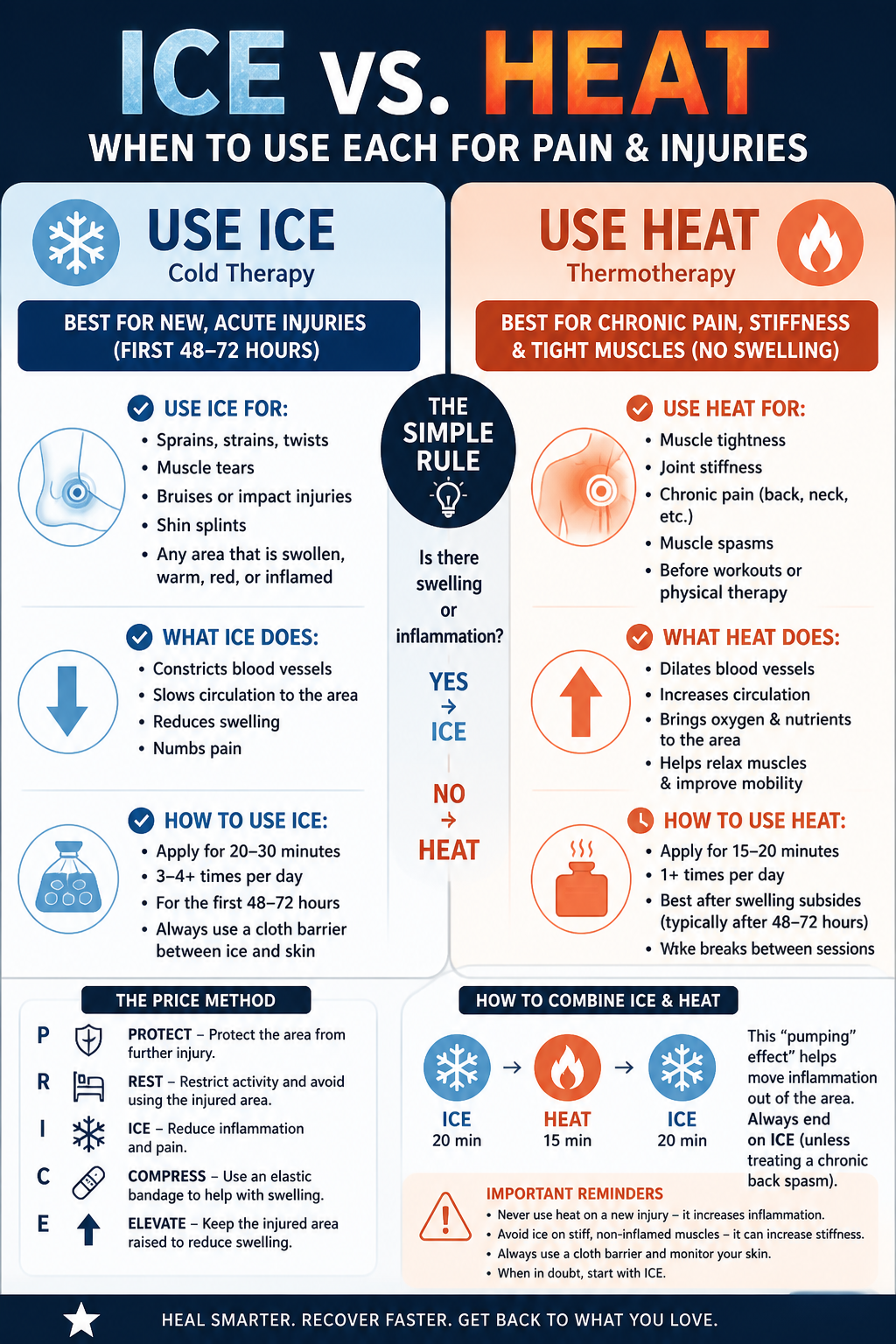
Use ice for new injuries (first 48–72 hours)
If it’s fresh, swollen, or irritated—ice should be your first move.
Common situations:
Sprains, strains, twists
Muscle tears
Bruises or impact injuries
Shin splints
Any area that is swollen, warm, or inflamed
What ice does:
Constricts blood vessels
Slows circulation to the area
Reduces swelling and inflammation
Numbs pain
Why it works:
Less inflammation = less pressure = less pain
This is why athletes:
Ice injuries immediately
Use ice baths after training or games
They’re not chasing comfort—they’re managing recovery.
When to Use Heat (Thermotherapy)
Use heat after swelling goes down (typically after 48–72 hours)
Heat absolutely has a role—it’s just often used at the wrong time.
Best for:
Muscle tightness
Joint stiffness
Chronic pain
Back/neck discomfort
Before workouts or physical therapy
What heat does:
Dilates blood vessels
Increases circulation
Brings oxygen and nutrients to the area
Helps tissue heal and loosen
Important:
Using heat too early increases inflammation and can make pain worse
The Cycle That Keeps People Stuck
This is what I see all the time:
Injury happens
Heat is applied → feels good temporarily
Inflammation increases
Pain comes back worse
Repeat
That’s not a healing strategy—it’s a loop.
The Simple Rule to Follow
If you remember nothing else, remember this:
New, swollen injury? → ICE 🧊
Tight, stiff, or chronic issue? → HEAT 🔥
Or even simpler:
“Is there swelling?”
Yes → Ice
No → Heat may help
How to Use Ice and Heat Properly
Ice:
20–30 minutes at a time
3–4+ times per day
For the first 48–72 hours
Always use a cloth barrier
Heat:
15–20 minutes at a time
1+ times per day
Best after swelling subsides
Take breaks between sessions
The Full Recovery Approach (What Actually Works Best)
For injuries, think beyond just ice vs. heat.
A proven framework is the PRICE method:
Protect the area
Rest and limit activity
Ice to control inflammation
Compress with a bandage
Elevate to reduce swelling
This combination helps speed up recovery and prevent things from getting worse.
Using Ice and Heat Together
Once swelling has gone down, you can start using both strategically:
Heat in the morning or before activity → loosen and prepare
Ice later in the day → reduce inflammation that builds up
This approach helps you stay mobile and recover properly.
Quick Note on “Hot/Cold” Creams
Products that feel hot or cold (like menthol or capsaicin):
👉 Don’t actually change inflammation
👉 They just alter how your nerves perceive pain
They can help with comfort—but they’re not doing the same job as real ice or heat.