

Slow Down
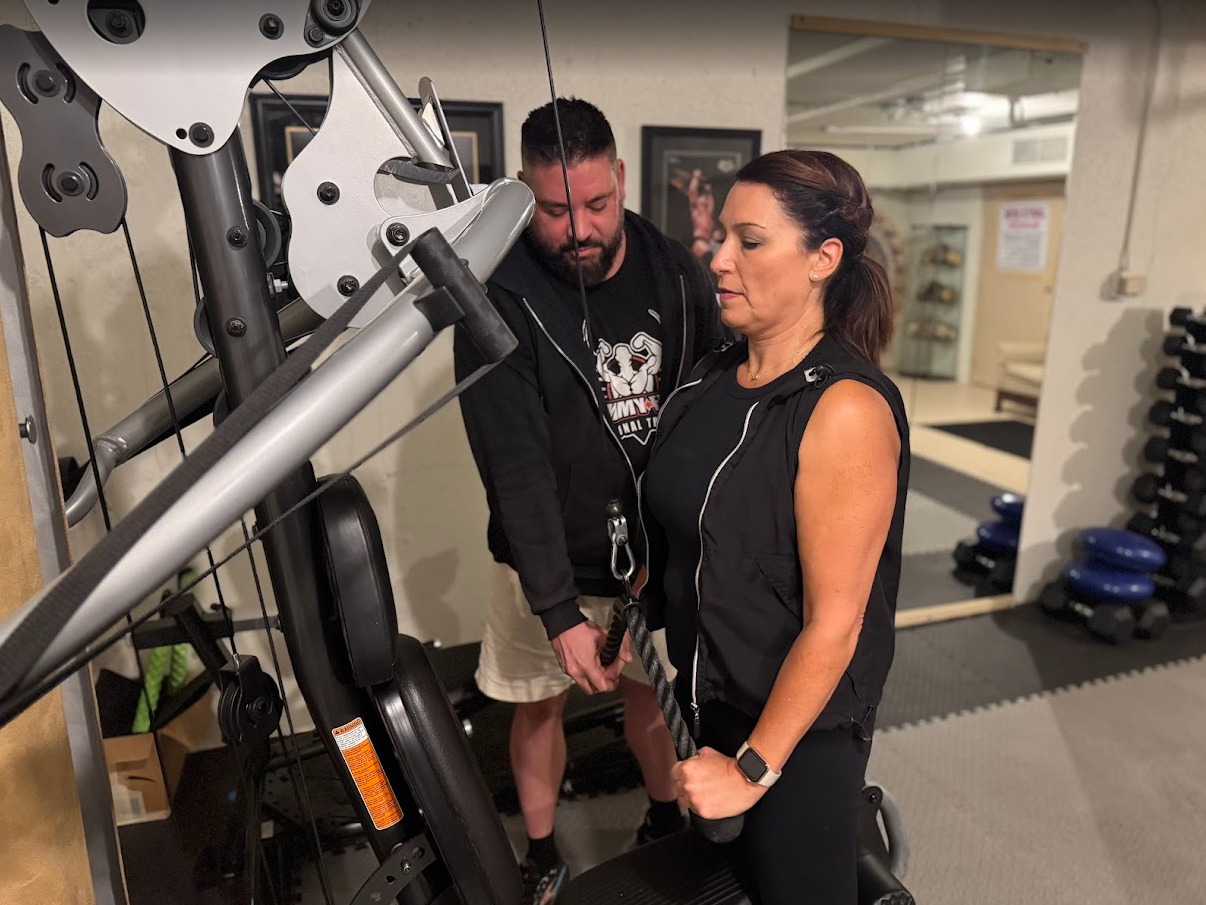
If there’s one thing my clients hear me say more than anything during a training session it’s to “slow down.” The other would be to hold the rep, or pause before completing the next part of it.
People who train with speed aren’t doing it wrong, they just have different goals than the majority of my clientele. So, I thought I’d break down exactly why I emphasize slow and controlled movements when training.
There’s No One Perfect Speed—But There’s a Better Approach for Most People
If you’re training for:
- Explosive power
- Athletic performance
Then yes—moving fast has its place.
But most of my clients aren’t training for that.
They want to:
- Build muscle
- Lose fat
- Get stronger
- Stay pain-free
And for those goals, slow, controlled reps are one of the most effective tools we have.
Every Rep Has 3 Parts (Most People Ignore 2 of Them)
Every rep you do includes:
- Concentric – lifting the weight
- Eccentric – lowering the weight
- Isometric – the pause or transition between them
Most people only focus on the lifting part…
But the real results come from controlling all three.
1. Slowing Down Increases Time Under Tension (And That Drives Results)
One of the biggest reasons I coach slow reps is something called time under tension (TUT).
That’s just how long your muscle is actually working during a set.
When you slow down:
- You keep the muscle engaged longer
- You increase total workload
- You stimulate more muscle growth
Even small changes in tempo can double the amount of work your muscles are doing in a single rep.
2. The “Negative” (Lowering Phase) Is Where Most People Lose Progress
The eccentric phase—the lowering portion—is where a lot of the benefit happens.
But most people:
- Drop the weight
- Rush through it
- Let gravity do the work
When you control that phase:
- The muscle stays active
- Strength improves
- Growth increases
3. Slow Reps Force Proper Form
Fast reps hide bad form.
Slow reps expose it.
When you slow down, you:
- Feel the movement
- Stay in control
- Use the right muscles
4. It Makes Lighter Weights More Effective
Instead of just adding more weight, we increase difficulty by:
- Slowing the tempo
- Adding pauses
- Controlling each phase
This makes lighter weights feel significantly heavier—and far more effective.
5. It Keeps You Safer and More Consistent
Going slower makes you more aware of how your body is moving.
That awareness:
- Improves form
- Reduces injury risk
- Helps you stay consistent long-term
6. Why I Coach Controlled Reps Both Up AND Down
Some research suggests lifting fast on the way up and controlling the way down.
But in real-world training, most people lose control when they move fast.
So instead, I coach:
Controlled up + controlled down
Because it:
- Keeps tension on the muscle the entire time
- Reinforces proper movement
- Reduces risk
- Delivers consistent results
A Simple Example of How I Coach Tempo
A typical rep might look like:
- 2–3 seconds up
- Brief pause
- 2–3 seconds down
Final Thought
There’s a time and place for fast, explosive training.
But for most people…
If your goal is to:
- Build muscle
- Lose fat
- Get stronger
- Stay injury-free
Slowing down isn’t a limitation—it’s the advantage.
