

Sodium Awareness
When people think about eating too much sodium, they often picture someone covering their fries with salt or heavily seasoning their dinner. While those habits can certainly increase sodium intake, they aren't where most Americans are getting the majority of their sodium.
The reality is much more surprising.
Over 70% of the sodium Americans consume comes from packaged, processed, and restaurant foods—not from the salt you add at the table. That means you could stop using your salt shaker tomorrow and still consume far more sodium than your body needs.
The good news? Once you understand where sodium hides and how to spot it, making healthier choices becomes much easier.
Sodium Isn't the Enemy
Let's start with an important point:
Your body needs sodium.
Sodium is an essential mineral that helps:
Maintain proper fluid balance
Support healthy nerve function
Allow muscles—including your heart—to contract properly
Regulate normal cellular function
Without sodium, your body simply couldn't function.
The problem isn't sodium itself.
The problem is consuming far more than your body needs, day after day, often without realizing it.
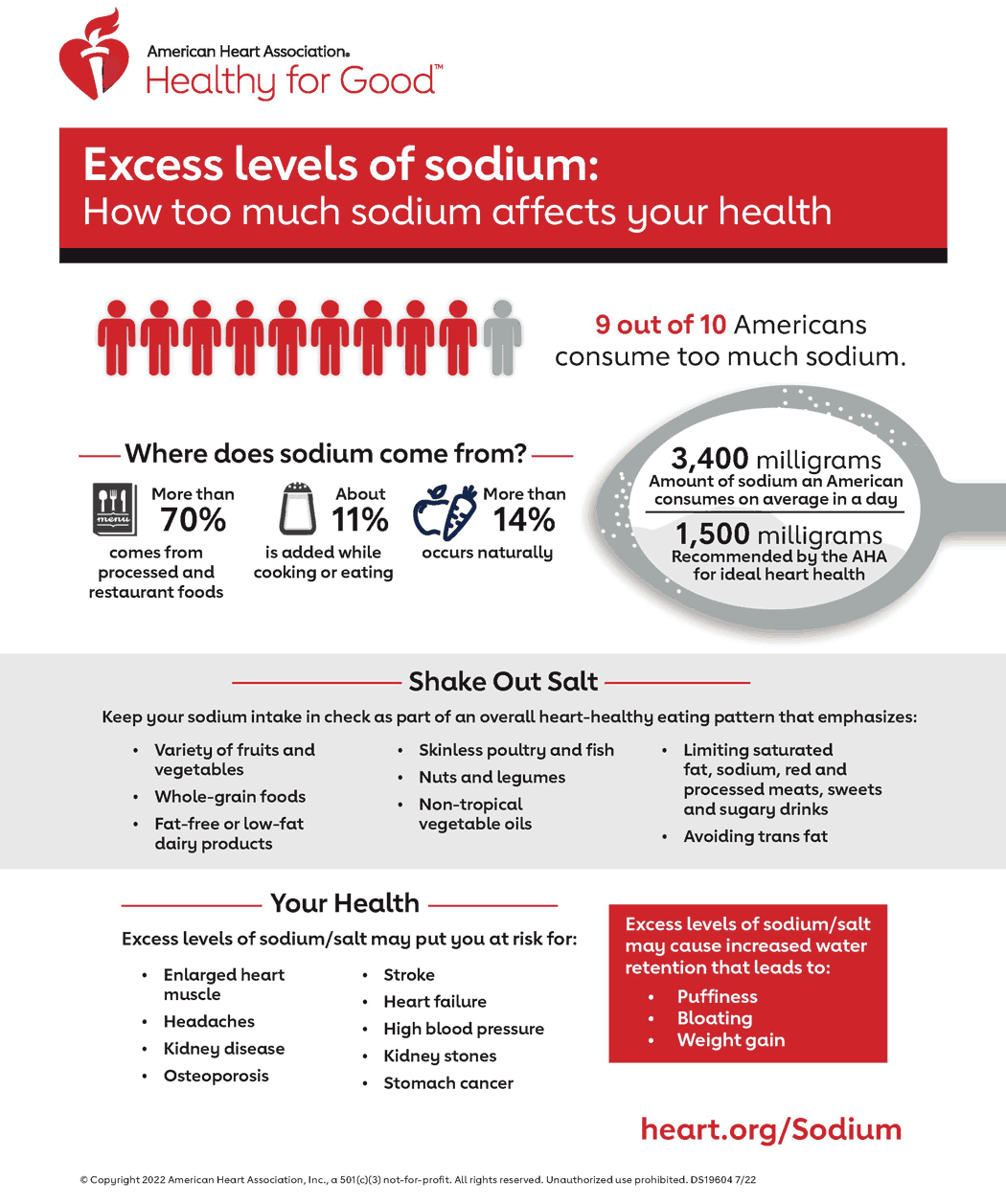
According to the Centers for Disease Control and Prevention (CDC), the average American consumes more than 3,300 milligrams of sodium every day, well above the recommended limit of less than 2,300 milligrams per day for most adults. The American Heart Association (AHA) recommends an ideal goal of 1,500 milligrams per day for optimal heart health.
Perhaps even more concerning…
Nine out of ten Americans consume too much sodium.
It's Not Your Salt Shaker
One of the biggest misconceptions about sodium is that it comes primarily from adding table salt to food.
In reality, that's only a small part of the story.
According to the American Heart Association:
More than 70% comes from processed and restaurant foods.
About 11% is added while cooking or at the table.
More than 14% occurs naturally in foods.
Think about that for a moment.
Even if you never add a single grain of salt to your meals, you can still consume several thousand milligrams of sodium every day simply by eating packaged foods or dining out regularly.
That's why awareness—not elimination—is the key.
The Foods You Least Expect
Many people assume sodium only comes from foods that taste salty.
Not true.
Some of the biggest contributors to sodium intake include:
Sandwiches
Bread and tortillas
Pizza
Soups
Rice and pasta dishes
Frozen meals
Deli meats
Poultry dishes
Burgers
Burritos and tacos
Chips and crackers
Condiments and sauces
Even breakfast cereals and pastries
Some of these foods don't taste salty at all.
That's because sodium serves many purposes besides flavor. Manufacturers use it to preserve food, improve texture, retain moisture, enhance other flavors, and extend shelf life.
You'll often find sodium hiding in ingredients such as:
Monosodium glutamate (MSG)
Sodium bicarbonate (baking soda)
Sodium nitrite
Sodium benzoate
Sodium nitrate
This is exactly why taste isn't a reliable way to judge sodium content.
Why Too Much Sodium Matters
Your body carefully regulates sodium levels.
When sodium intake becomes consistently excessive, your body responds by holding onto more water.
That extra water increases the amount of fluid circulating through your bloodstream.
More fluid means more pressure against your artery walls.
Over time, that elevated pressure forces your heart to work harder and can damage blood vessels and vital organs.
Chronically high sodium intake has been associated with an increased risk of:
High blood pressure (hypertension)
Heart disease
Stroke
Heart failure
Enlarged heart muscle
Kidney disease
Kidney stones
Osteoporosis
Stomach cancer
Poor cardiovascular-kidney-metabolic health
Heart disease and stroke remain two of the leading causes of death in the United States, making sodium awareness an important part of protecting your long-term health.
Why the Scale Suddenly Jumps Overnight
Have you ever eaten pizza, Chinese food, fast food, or a restaurant meal and stepped on the scale the next morning only to find yourself three pounds heavier?
Most people assume they've gained body fat overnight.
Fortunately, that's almost never the case.
Sodium attracts water.
When you consume a high-sodium meal, your body temporarily retains extra fluid to help maintain the proper balance of sodium and water.
That water retention can cause:
Puffiness
Swollen fingers
Bloating
A "soft" feeling
Temporary weight gain
The American Heart Association specifically identifies puffiness, bloating, and weight gain as common effects of excess sodium-related water retention.
Understanding this can prevent unnecessary frustration.
One salty meal didn't add three pounds of fat.
It simply added water that your body will gradually release once your sodium intake returns to normal.
Learn to Read the Nutrition Facts Label
One of the simplest ways to improve your diet is to spend a few extra seconds reading the Nutrition Facts label.
Here's what to look for:
Daily Value (DV)
The FDA recommends limiting sodium intake to less than 2,300 mg per day.
Use the % Daily Value
A quick rule of thumb:
5% DV or less = Low sodium
20% DV or more = High sodium
When comparing products, choose the one with the lower % Daily Value whenever possible.
Check the Serving Size
This is where many people get fooled.
A package may appear to contain 500 mg of sodium—but if it contains two servings and you eat the whole thing, you've actually consumed 1,000 mg.
Serving sizes matter.
10 Easy Ways to Reduce Sodium
Reducing sodium doesn't mean eating bland food.
Small changes can make a significant difference.
Here are ten practical strategies recommended by the FDA:
Read Nutrition Facts labels before buying packaged foods.
Prepare more meals at home.
Use herbs, spices, garlic, onion, citrus, and vinegar instead of relying on salt.
Buy fresh meat, poultry, and seafood whenever possible.
Choose fresh, frozen (without sauces), or no-salt-added vegetables.
Rinse canned beans, vegetables, and tuna before using them.
Choose unsalted or low-sodium snacks.
Use condiments sparingly and look for reduced-sodium versions.
Eat smaller restaurant portions or take half home.
Ask restaurants to prepare your meal without added salt and serve sauces on the side.
Awareness Is More Powerful Than Restriction
As a trainer and nutrition coach, one of the biggest mistakes I see is people trying to eliminate an entire nutrient instead of understanding it.
Sodium isn't something to fear.
It's something to be aware of.
The goal isn't to obsess over every milligram or avoid seasoning your food forever.
The goal is to recognize where sodium is hiding so you can make informed decisions.
Cooking at home more often, reading nutrition labels, choosing whole foods more frequently, and limiting highly processed foods can dramatically reduce your sodium intake without making your diet miserable.
Small choices repeated consistently have a powerful impact on your health.
Final Thoughts
You don't need to throw away your salt shaker.
You don't need to swear off pizza forever.
And you certainly don't need to eliminate sodium from your diet.
What you do need is awareness.
Most people aren't consuming too much sodium because they love salty food—they're consuming too much because sodium is quietly built into the foods they eat every day.
Once you begin reading nutrition labels and recognizing hidden sources of sodium, you'll be amazed at how much control you actually have over your health.
Your heart, kidneys, blood pressure, and even the number on the scale will benefit from the effort.
Sources
Centers for Disease Control and Prevention (CDC) – Sodium and Health (updated March 31, 2026)
U.S. Food and Drug Administration (FDA) – Sodium in Your Diet: Use the Nutrition Facts Label and Reduce Your Intake
American Heart Association – Excess Levels of Sodium: How Too Much Sodium Affects Your Health
